JC-X50 Handheld XRF Analyzer for Alloy Identification and Mineral Screening

jctest-handheld-xrf-spectrometer-jc-x50.png
Specific details
Please contact us

Refunds

Please contact us for details
Product Specifications Reference
Configuration elements
Alloying methods include, but are not limited to, Ti, V, Cr, Mn, Fe, Co, Ni, Cu, Zn, Y, Se, Zr, Nb, Mo, Ru, Pd, Ag, Au, Cd, Pb, Bi, Sn, Sb, W, Ta, Hf, Re, etc.

Payment method

COMM
COMM
Product Details
Product Details

Portable X-Ray Fluorescence Analysis

JC-X50 Handheld XRF Analyzer for On-Site Elemental Screening

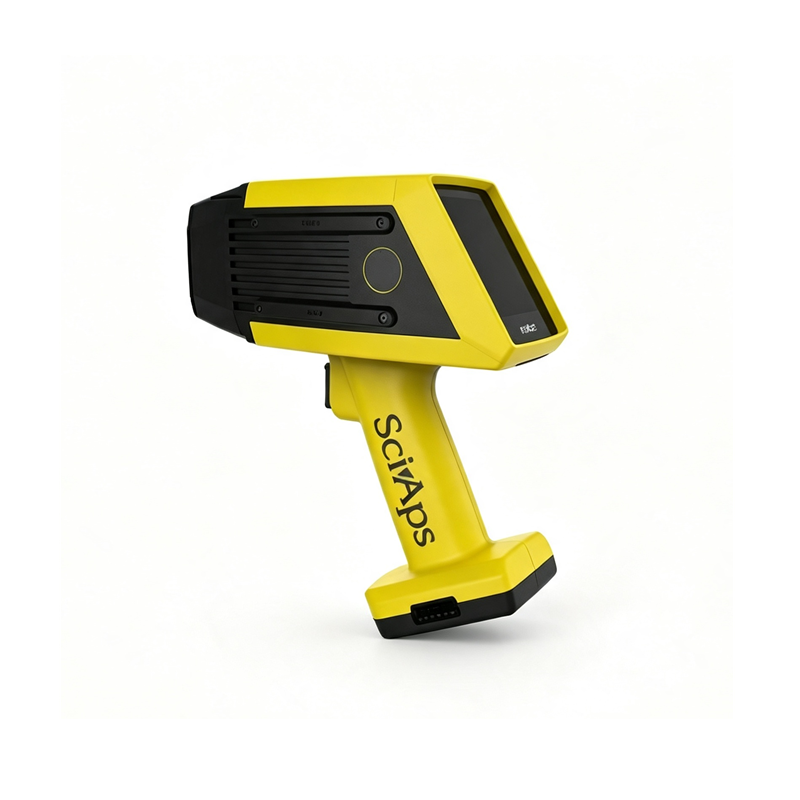
The JC-X50 handheld XRF analyzer is a portable instrument for rapid, non-destructive elemental analysis, XRF alloy identification, and mineral sample screening. It brings material verification directly to receiving areas, workshops, warehouses, recycling yards, and field locations, helping industrial teams obtain practical composition information without routine destructive sampling.

Designed for industrial field work

Jincheng integrates an X-ray source, SDD detector, automatic filters, dual cameras, Android software, and digital reporting functions in a compact handheld structure for material inspection teams.

Why On-Site Material Verification Matters

Material composition questions often arise where materials are received, processed, stored, repaired, or sorted. Sending every item to a laboratory may interrupt production decisions and delay material separation. The JC-X50 supports an efficient first-level screening process by providing on-site elemental information for metals and selected mineral or geological samples.

Incoming Material Checks

Assist quality and purchasing teams in checking whether delivered metal materials generally match the expected alloy category or element profile.

Material Mix-Up Prevention

Support production and maintenance teams in identifying questionable components before they enter a process, assembly, repair, or storage location.

Field Sample Screening

Provide preliminary elemental information for mineral samples and geological materials, supporting subsequent sample classification or laboratory planning.

Core XRF Analysis Capabilities

The JC-X50 combines detector performance, automated analysis conditions, and field-oriented software to support repeatable screening workflows. Actual detection limits, accuracy, and available element ranges depend on sample matrix, surface condition, test time, selected calibration method, operating mode, and instrument configuration.

Non-Destructive Elemental Analysis

X-ray fluorescence analysis enables elemental screening without conventional destructive sampling. This makes the instrument suitable for checking metal parts, raw materials, scrap, and accessible sample surfaces while preserving the tested item.

SDD Detector and Rhodium Target Tube

A high-precision SDD detector works with a compact rhodium target X-ray tube to collect spectral information for alloy identification and mineral screening. The stated energy resolution is 190 eV FWHM at the 5.95 keV Mn Kα line.

Automatic Six-Filter Control

Six filters can switch automatically according to operating voltage and target elements. This reduces manual adjustment steps and helps operators apply the selected method more consistently during field testing.

Alloy and Mining Analysis Modes

Alloy analysis mode supports metal identification and sorting applications. Mining mode supports mineral sample and geological material screening. The appropriate mode and calibration model should be confirmed against the intended sample type.

Traceability and Digital Result Management

A field test is more useful when the result can be connected to the correct sample, part, batch, or inspection point. JC-X50 includes imaging, identification, and export functions that help teams organize test records within their own quality-control procedures.

Dual-Camera Positioning

The internal HD camera displays the sample before and during analysis, helping the operator verify alignment between the measurement window and the selected test point.

Barcode, QR Code, and Image Records

The macro camera can scan QR codes and barcodes and capture images for reports. These functions help link results with incoming lots, component IDs, storage labels, or inspection locations.

CSV, PDF, USB, and Bluetooth Output

Android-based analysis software supports CSV and PDF output. Results can be transferred by USB or shared through Bluetooth with compatible mobile devices for review, reporting, and archiving.

Portable Structure for Workshop and Field Use

JC-X50 is designed for inspection work beyond a fixed laboratory bench. Its compact probe geometry, rechargeable battery system, and industrial touchscreen support routine measurements at material locations, including areas where sample access or working time may be limited.

Compact Handheld Format The instrument weighs less than 1.5 kg and measures approximately 238 × 283 × 84 mm. Its compact head supports testing of conventional samples and access to some relatively narrow locations.
Longer Inspection Sessions A 14.4 V rechargeable lithium-ion battery supports more than 8 hours of continuous operation under specified conditions. Hot-swappable batteries help extend testing activity during longer shifts.
Stable Detector Operation A Peltier temperature-control system supports detector controller operation at approximately -30°C. The nominal environmental operating range is -12°C to 55°C, subject to the operating manual.
Industrial Touchscreen Design The fixed 3.5-inch industrial touchscreen avoids a rotating display mechanism and is intended for practical use in dusty, humid, low-light, or bright-light environments.

Typical Applications for JC-X50 XRF Alloy Identification

The analyzer is suitable for B2B organizations that need to bring elemental screening to the point where materials are handled. It can support internal material decisions when used with appropriate methods, operating procedures, and result-review requirements.

Manufacturing and Fabrication

Check incoming bar, plate, casting, forging, fastener, and component materials; assist with alloy sorting and material verification during production or maintenance activities.

Metal Recycling and Scrap Sorting

Support identification and separation of alloy materials in recycling workflows, helping teams classify mixed metal streams based on on-site elemental screening.

Mining and Geological Screening

Screen mineral samples and geological materials in the field to support sample selection, preliminary classification, and planning for further laboratory analysis.

Quality Control and Technical Inspection

Use on parts, weld areas, pipelines, fittings, and accessible inspection points where a quality team needs timely composition information and digital test records.

Selection, Verification, and Safe Use Considerations

A handheld XRF analyzer should be selected according to the actual sample, target elements, and decision process. Jincheng recommends confirming the intended application before configuration so that analysis mode, tube voltage, calibration approach, data workflow, and operational controls match the inspection task.

  • Confirm sample conditions: Material matrix, coatings, oxidation, contamination, surface roughness, geometry, and measurement area can influence XRF results.
  • Confirm target elements and configuration: The standard maximum tube voltage is 40 kV, with an optional 50 kV configuration. Required elements and applicable methods should be reviewed before purchase.
  • Define how results will be used: For formal acceptance, quality release, or disputed decisions, appropriate calibration verification, certified reference materials, and laboratory confirmation methods may be required.
  • Plan traceability workflows: Organizations managing multiple lots or inspection points should define their barcode, image, CSV, PDF, USB, and Bluetooth record-handling procedures.
  • Follow radiation safety requirements: JC-X50 generates X-rays during measurement and must be operated only by trained personnel in accordance with the operating manual, workplace procedures, and applicable local radiation safety regulations.

A Practical Instrument for Material Screening at the Point of Work

The JC-X50 handheld XRF analyzer gives industrial teams a practical way to perform non-destructive elemental analysis where materials, components, and samples are actually handled. With alloy and mining analysis modes, SDD detection, automatic filter control, camera-assisted positioning, and digital result output, it supports more organized on-site material verification. Backed by Laizhou Jincheng Industrial Equipment Co., Ltd., the instrument is designed for organizations that require portable inspection capability while maintaining clear operational, traceability, and quality-control practices.

Product Parameters

JC-X50 Handheld XRF Analyzer

Handheld XRF Analyzer

Detailed Packing List

1) 

Handheld XRF analyzer

One handheld XRF analyzer main unit

2) 

Waterproof, rugged carrying case

One waterproof shipping box

3) 

USB Data transfer cable

One USB communication cable

4) 

2 Li-ion batteries

Two 14.4V rechargeable lithium batteries

5) 

Battery charger

1 set of battery charger

6) 

Kapton film window kit

One set of protective film for the inspection window (for backup) 

7) 

Operation manual

One instruction manual

8) 

Analysis software Recovery USB flash disk

Analysis software backup USB drive

9) 

Alloy standard sample

Alloy Standard Sample 3: 16 Stainless Steel

10) 

Special screwdriver

1 special tool

11) 

Note

One copy of usage instructions

12) 

I nstallation acceptance list

Two installation acceptance forms


Analysis software package

1) 

Mining Mode

Alloy Analysis Mode

X50 Technical Specifications

Inspiration Source

High-performance miniature X-ray tube, Rh target anode material; maximum tube voltage 40KV; maximum tube current 100uA; matching power 4W (50kV optional).

Detector

High-performance, high-precision, high-sensitivity SDD detector; 190eV resolution FWHM, 5.95Mn K-α line.

★Standard Block

External 316 stainless steel standard samples are used for calibration verification and energy scaling verification.

Analyzing the environment

Ambient temperature: -12°C to 55°C

External dimensions:

Dimensions: 238mm x 283mm x 84mm ; Instrument head dimensions: 22mm (front) x 45mm (middle) x 60mm (rear). It can test both standard metal samples and samples requiring close inspection in narrow slits . Weight: <1.5 kg . No external support is needed; the instrument can be placed upright on a horizontal surface, making testing more effortless.

Cooling system

The instrument employs a Peltier constant-temperature cooling system, allowing the controller to operate at -30 ℃, ensuring the instrument's detection accuracy and preventing it from being affected by external temperatures.

Configuration elements

Alloy alloying methods include, but are not limited to, Ti, V, Cr, Mn, Fe, Co, Ni, Cu, Zn, Y, Se, Zr, Nb, Mo, Ru, Pd, Ag, Au, Cd, Pb, Bi, Sn, Sb, W, Ta, Hf, Re, etc.

filter

It is equipped with 6 filters that can automatically switch according to different voltages, and different elements use different filters to produce the best analysis results.

monitor

The integrated design enhances dustproof, fogproof, and waterproof performance; the fixed display with no rotating or moving parts results in a low failure rate; the industrial-grade high-resolution PowerVR SGX540 3.5- inch smart touchscreen utilizes white light display technology, eliminating the high-altitude effect of LCDs and providing excellent visibility in both low-light and high-light environments. It also boasts low energy consumption, consuming half the power of traditional white light displays, thus improving display performance in various environments.

Camera & Collimator

Built-in dual cameras : an internal high-definition camera for viewing samples before and during analysis to ensure proper sample alignment; and a macro camera for scanning QR codes or barcodes, as well as generating photo documents and reports.

Operating System

Android smart operating system

memory card

1GB DDR2 RAM, 1GB NAND, 8GB eMMC (storage)

Data format

CSV and PDF formats

Data transmission

Featuring a dual-core ARM Cortex-A9 processor (1.2GHz) and an ARM Cortex-A53 64/32-bit processor, the system allows for real-time sharing of test results to mobile phones via Bluetooth. Results can be sent to relevant personnel on-site via WeChat, QQ, or email, offering convenience, speed, and improved communication efficiency.

Main unit power supply system

It uses a rechargeable lithium battery, which can work continuously for more than 8 hours on a single charge, and features hot-swappable functionality (maximum swap time 60 seconds). 

Testing software

Alloy-specific testing software

Automatic diagnostic and fault reporting functions

Machine faults can be diagnosed and software upgraded remotely via the Internet; remote hardware upgrades are also possible.

Contact us
Contact us
https://shmuker.oss-accelerate.aliyuncs.com/tmp/temporary/60ec5bd7f8d5a86c84ef79f2/60ec5bdcf8d5a86c84ef7a9a/thumb-prev.png